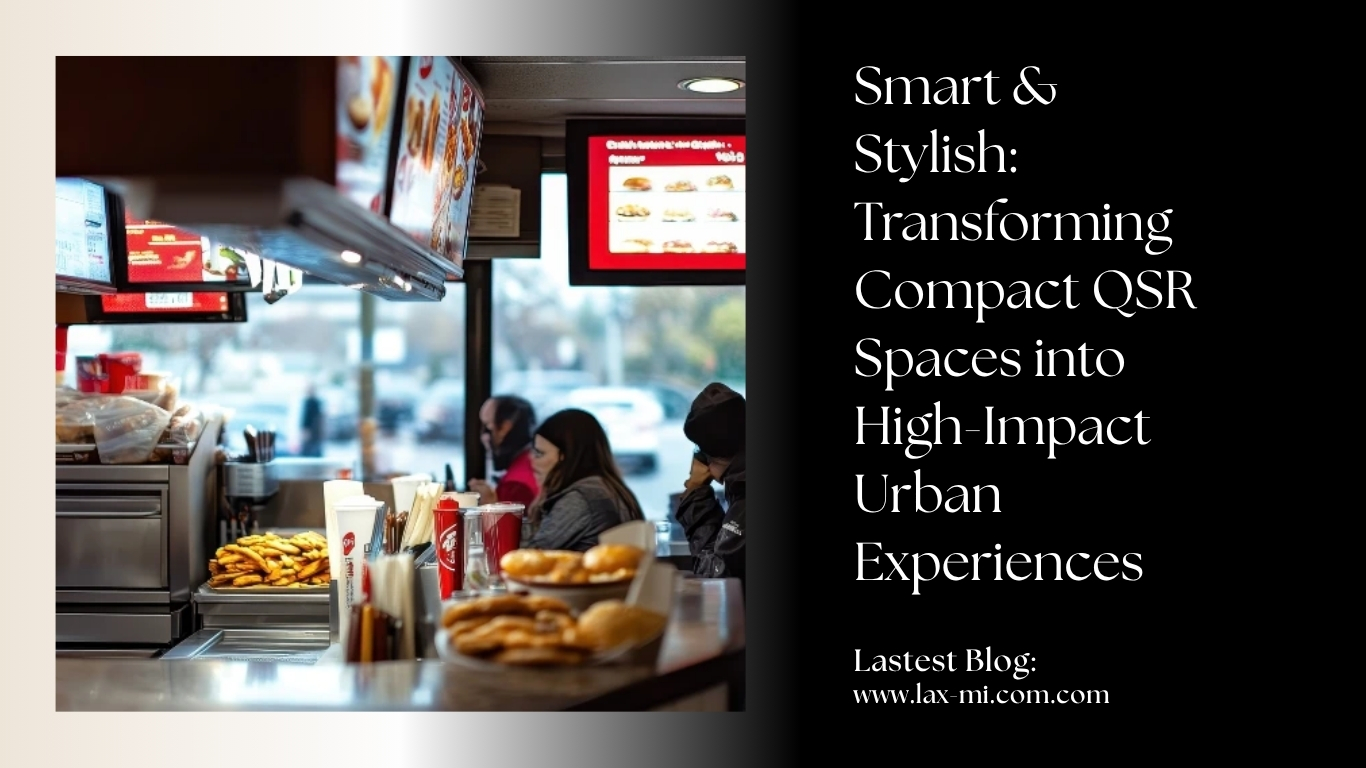
Smart & Stylish: Transforming Compact QSR Spaces into High-Impact Urban Experiences
Urban spaces are shrinking, yet the demand for quick service restaurants continues to grow at an impressive pace. As cities become denser, businesses must adapt intelligently to maximize every square foot. This shift has created a new wave of innovation in compact QSR design, where efficiency meets creativity. Today, it is no longer enough to simply serve food quickly. Instead, brands must deliver memorable experiences within limited spaces while maintaining operational excellence.
Compact QSR design ideas for urban locations are shaping the future of the food service industry. With rising rents and evolving customer expectations, thoughtful design plays a crucial role in success. From smart layouts to multifunctional furniture, every element must work harder and smarter. Moreover, modern consumers expect convenience, speed, and aesthetics all at once. Therefore, creating a compact yet impactful QSR space has become both a challenge and an opportunity.
In this blog, you will explore practical and innovative design ideas that help transform small urban QSR outlets into efficient, attractive, and profitable spaces. Each section dives deep into strategies that enhance functionality while delivering a strong brand identity.
Optimizing Layout for Maximum Efficiency
The layout forms the backbone of any successful QSR design. In compact urban locations, a poorly planned layout can disrupt workflow and reduce service speed. Therefore, designing a streamlined flow is essential. Every inch should contribute to efficiency without compromising customer comfort.
Start by focusing on a linear or assembly-line layout. This approach minimizes unnecessary movement and allows staff to work faster. Additionally, placing key stations like ordering, preparation, and pickup in a logical sequence reduces confusion. Customers also benefit from this clarity, as they can navigate the space easily.
Another effective strategy involves zoning the space carefully. Separate areas for cooking, service, and customer interaction ensure smooth operations. Even in tight spaces, clear zoning prevents overcrowding and enhances productivity. Furthermore, integrating vertical storage solutions helps free up valuable floor space.
Ultimately, a well-optimized layout improves both speed and experience. It ensures that staff can perform efficiently while customers enjoy a seamless journey from entry to exit.
Smart Seating Solutions for Small Spaces
Seating in compact QSRs requires a delicate balance between capacity and comfort. While maximizing seating is important, overcrowding can negatively impact the customer experience. Therefore, smart seating solutions become essential.
Consider using wall-mounted benches or foldable seating options. These designs save space while offering flexibility. Additionally, high stools and narrow counters work well in urban QSRs where quick dining is the norm. Customers appreciate functional seating that aligns with the fast-paced environment.
Communal tables also provide an excellent solution. They encourage shared seating and increase occupancy without taking up extra space. At the same time, they create a lively and social atmosphere.
Moreover, incorporating outdoor seating where possible can significantly expand capacity. Even a small sidewalk setup can attract more customers and enhance visibility. Thus, smart seating strategies ensure efficient space utilization without compromising comfort.
Multi-Functional Furniture for Versatility
Furniture in compact QSRs should serve more than one purpose. Multi-functional designs help maximize utility while reducing clutter. This approach is especially valuable in urban locations where space constraints demand creative solutions.
For instance, tables with built-in storage compartments can hold utensils or supplies. Similarly, foldable counters can act as prep areas during peak hours and dining spaces during slower periods. These flexible elements allow businesses to adapt quickly to changing demands.
Another innovative idea involves using modular furniture. These pieces can be rearranged easily based on crowd size or operational needs. As a result, the space remains dynamic and efficient throughout the day.
By investing in multi-functional furniture, QSR owners can enhance both functionality and aesthetics. This approach ensures that every element contributes to the overall efficiency of the space.
Efficient Kitchen Design for Speed and Productivity
The kitchen is the heart of any QSR. In compact setups, its design directly impacts service speed and quality. Therefore, efficiency must remain the top priority.
A well-organized kitchen layout minimizes movement and maximizes productivity. Placing frequently used equipment within easy reach saves time and effort. Additionally, using compact and energy-efficient appliances helps optimize space without sacrificing performance.
Vertical storage solutions play a key role in small kitchens. Shelves, racks, and hanging systems keep tools organized and accessible. This arrangement reduces clutter and improves workflow.
Moreover, adopting a minimalist approach ensures that only essential equipment occupies the kitchen. This strategy prevents overcrowding and allows staff to work comfortably. Ultimately, an efficient kitchen design supports faster service and better customer satisfaction.
Leveraging Technology for Compact QSRs
Technology has become a powerful tool in modern QSR design. In compact urban locations, it helps streamline operations and enhance customer experience.
Self-ordering kiosks reduce the need for large counters and minimize queues. Customers can place orders quickly, which speeds up service and improves efficiency. Similarly, mobile ordering apps allow customers to order in advance, reducing congestion during peak hours.
Digital menu boards also contribute to space optimization. They eliminate the need for large static displays while offering flexibility to update menus instantly. Additionally, integrated payment systems ensure faster transactions.
By leveraging technology, QSRs can overcome space limitations and deliver a seamless experience. This approach not only improves efficiency but also meets the expectations of modern consumers.
Creative Storage Solutions to Reduce Clutter
Storage often becomes a challenge in compact QSRs. Without proper planning, clutter can quickly take over the space. Therefore, creative storage solutions are essential.
Utilizing vertical space is one of the most effective strategies. Installing shelves up to the ceiling maximizes storage without occupying floor space. Additionally, under-counter storage helps keep essential items within reach.
Hidden storage compartments offer another smart solution. These designs maintain a clean and organized appearance while providing ample storage. For example, seating benches can double as storage units.
Moreover, organizing storage systematically ensures easy access to supplies. Labeling and categorizing items prevent confusion and save time. Thus, efficient storage solutions contribute to a clutter-free and functional environment.
Lighting Design to Enhance Perception of Space
Lighting plays a crucial role in shaping the perception of space. In compact QSRs, the right lighting can make the area feel larger and more inviting.
Bright and evenly distributed lighting creates an open and airy atmosphere. Additionally, using mirrors along with lighting enhances the sense of space. This combination reflects light and visually expands the area.
Accent lighting can highlight key areas such as the menu or seating zones. This approach adds depth and character to the design. Moreover, warm lighting tones create a welcoming ambiance that encourages customers to stay longer.
By carefully planning lighting design, QSR owners can transform small spaces into visually appealing environments. This strategy enhances both aesthetics and customer experience.
Minimalist Interior Design for a Clean Look
Minimalism is a powerful approach in compact QSR design. By focusing on simplicity, businesses can create a clean and organized space that feels larger than it is.
Using a limited color palette helps maintain visual harmony. Neutral tones combined with subtle accents create a modern and elegant look. Additionally, reducing unnecessary decorations prevents clutter and enhances functionality.
Simple furniture designs further contribute to a minimalist aesthetic. Sleek and compact pieces ensure efficient use of space. At the same time, they create a sophisticated appearance.
Minimalist design not only improves aesthetics but also supports operational efficiency. It allows staff to move freely while providing customers with a comfortable environment.
Branding Through Compact Design Elements
Even in small spaces, strong branding remains essential. Every design element should reflect the brand’s identity and values. This approach creates a memorable experience for customers.
Wall graphics, signage, and color schemes play a significant role in branding. These elements communicate the brand’s personality effectively. Additionally, using consistent design themes across the space reinforces brand recognition.
Packaging design also contributes to branding. In compact QSRs, takeaway orders often dominate. Therefore, visually appealing packaging enhances the overall experience.
By integrating branding into design, QSRs can create a unique identity that stands out in competitive urban markets.
Maximizing Visibility and Street Appeal
In urban locations, visibility can make or break a QSR. A well-designed exterior attracts customers and increases footfall. Therefore, maximizing street appeal becomes crucial.
Large glass windows create transparency and invite customers inside. They also showcase the interior design and create curiosity. Additionally, bold signage ensures that the outlet stands out even in crowded areas.
Using vibrant colors and creative displays further enhances visibility. These elements grab attention and create a strong first impression. Moreover, maintaining a clean and organized exterior reflects professionalism.
A visually appealing storefront not only attracts customers but also strengthens brand presence.
Incorporating Sustainability in Compact Design
Sustainability has become a key consideration in modern QSR design. Even in compact spaces, eco-friendly practices can make a significant impact.
Using energy-efficient appliances reduces operational costs and environmental impact. Additionally, incorporating sustainable materials such as recycled wood or metal enhances the design.
Waste management systems also play an important role. Proper segregation and disposal of waste contribute to sustainability. Moreover, encouraging reusable packaging aligns with modern consumer preferences.
By integrating sustainability into design, QSRs can create responsible and future-ready spaces.
Enhancing Customer Flow and Experience
Customer flow directly influences the efficiency of a QSR. In compact spaces, managing movement becomes even more critical.
Designing clear pathways ensures smooth navigation. Customers should easily move from entry to ordering and pickup areas. Additionally, minimizing bottlenecks improves service speed.
Queue management systems further enhance the experience. Organized queues reduce confusion and create a positive impression. Moreover, providing clear signage helps customers understand the process.
A well-planned customer flow ensures a seamless experience, even during peak hours.
Flexible Design for Changing Needs
Urban QSRs must adapt quickly to changing demands. Therefore, flexibility becomes a key design consideration.
Using modular elements allows easy reconfiguration of the space. For instance, movable partitions can create separate zones when needed. Similarly, adjustable furniture accommodates different group sizes.
Seasonal changes also require flexibility. Outdoor seating or temporary setups can help manage increased demand. Additionally, adaptable layouts support new menu concepts or service models.
Flexible design ensures that QSRs remain relevant and efficient in dynamic urban environments.
Creating an Instagram-Worthy Space
In today’s digital age, aesthetics play a crucial role in attracting customers. Compact QSRs can leverage this trend by creating visually appealing spaces.
Unique design elements such as murals or statement walls encourage customers to take photos. These visuals often get shared on social media, increasing brand visibility.
Lighting and color schemes also contribute to the overall appeal. Bright and vibrant designs create a lively atmosphere. At the same time, they enhance the customer experience.
An Instagram-worthy space not only attracts customers but also serves as a powerful marketing tool.
Conclusion
Compact QSR design ideas for urban locations offer endless opportunities for innovation. While space constraints present challenges, they also encourage creativity and efficiency. By focusing on smart layouts, multifunctional furniture, and advanced technology, businesses can transform small spaces into high-performing outlets.
Moreover, elements such as lighting, branding, and sustainability enhance both functionality and aesthetics. These factors work together to create a memorable customer experience. As urban environments continue to evolve, QSRs must adapt with thoughtful and flexible design strategies.
Ultimately, success lies in making every square foot count. With the right approach, even the smallest QSR can deliver a big impact.