Speed Meets Style: Smart QSR Design Ideas That Maximize Customer Flow and Boost Sales
In today’s fast-paced world, Quick Service Restaurants (QSRs) thrive on one critical factor—speed. Customers expect quick ordering, minimal waiting time, and seamless movement from entry to exit. Therefore, designing a Quick Service Restaurants (QSRs) thrive on one critical fact is not just a trend; it is a necessity for success. A well-planned layout can increase efficiency, improve customer satisfaction, and ultimately boost revenue.
Moreover, the modern customer values both convenience and experience. While speed remains essential, ambiance, comfort, and intuitive navigation play equally important roles. Consequently, businesses must strike a balance between operational efficiency and aesthetic appeal. This is where smart QSR design ideas come into play.
In this blog, you will explore powerful and practical design strategies that enhance customer flow without compromising style. Each section dives deep into specific elements that contribute to a smoother, faster, and more enjoyable dining experience.
Open and Intuitive Entrance Design
The entrance sets the tone for the entire customer journey. Therefore, it must be welcoming, clear, and easy to navigate. A clutter-free entry allows customers to quickly understand where to go next. When people step into a QSR, they should instantly locate the ordering counter without confusion.
Additionally, wide entry points reduce congestion during peak hours. Glass doors, minimal barriers, and clear signage help maintain visibility and openness. As a result, customers feel less overwhelmed and more inclined to move forward confidently.
Furthermore, placing menu displays near the entrance allows customers to decide faster. This small adjustment significantly reduces hesitation at the counter. Ultimately, a thoughtfully designed entrance improves both speed and customer satisfaction.
Strategic Layout Planning for Seamless Movement
A smart layout ensures that customers move smoothly through the space. In contrast, poor layouts create bottlenecks and frustration. Therefore, dividing the QSR into clear zones—ordering, waiting, pickup, and seating—becomes essential.
Straight-line layouts work best for high-traffic outlets. Customers enter, order, collect food, and exit without crossing paths unnecessarily. This linear movement reduces confusion and speeds up service.
At the same time, spacing between zones must remain adequate. Crowded areas slow down operations and create discomfort. Hence, designers should prioritize open pathways and logical flow patterns to maintain efficiency.
Efficient Counter Design for Faster Ordering
The ordering counter acts as the heart of any QSR. Therefore, its design directly impacts customer flow. A well-structured counter allows multiple customers to place orders simultaneously, reducing wait times.
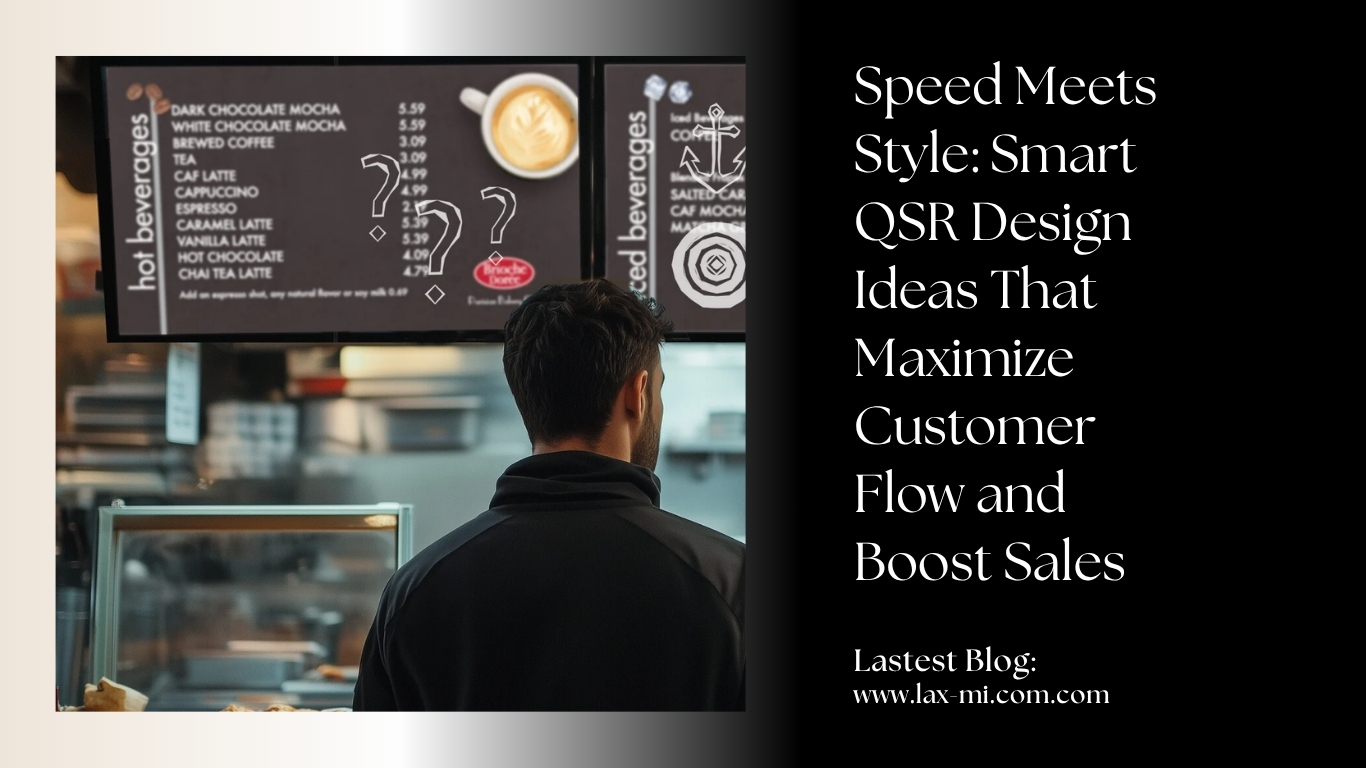
Long counters with multiple billing points increase efficiency. Additionally, digital screens above the counter help customers quickly scan menu options. This reduces ordering time and keeps the line moving.
Moreover, integrating self-service kiosks near the counter further speeds up the process. Customers who prefer digital ordering can bypass queues, improving overall flow. Clearly, combining traditional and modern solutions creates a balanced and effective system.
Smart Queue Management Systems
Managing queues efficiently is crucial for maintaining a smooth flow. Without proper planning, long lines can disrupt the entire experience. Therefore, QSRs must adopt smart queue strategies.
Single-line queues that split into multiple service points often work better than separate lines. This method ensures fairness and reduces confusion. Additionally, digital queue displays can guide customers and minimize crowding.
Floor markings also help maintain order. They subtly direct customers and prevent overcrowding near the counter. As a result, the space feels organized, even during busy hours.
Dedicated Pickup Zones for Quick Turnaround
A separate pickup zone prevents congestion near the ordering counter. Once customers place orders, they should move to a clearly defined pickup area. This separation keeps the ordering line flowing smoothly.
Pickup counters should remain visible and easy to access. Digital order number displays can further streamline the process. Customers can quickly identify when their order is ready without crowding the space.
Furthermore, placing the pickup zone closer to the exit enhances efficiency. Customers can grab their food and leave without disrupting others. This simple design choice significantly improves overall flow.
Flexible Seating Arrangements
Seating plays a vital role in customer movement. While QSRs focus on quick turnover, seating should still feel comfortable and accessible. Therefore, flexible seating arrangements work best.
High tables, bar seating, and compact chairs allow quick occupancy and faster turnover. These options also save space, making movement easier. Additionally, movable furniture provides adaptability during peak and off-peak hours.
At the same time, maintaining clear walkways between seating areas remains essential. Customers should move freely without bumping into furniture. This balance ensures both comfort and efficiency.
Clear Signage and Wayfinding Elements
Customers should never feel lost inside a QSR. Therefore, clear signage becomes a critical design element. Directional signs guide customers through each step—ordering, waiting, pickup, and exit.
Using bold fonts and contrasting colors improves visibility. Icons and symbols also help communicate quickly, especially in busy environments. As a result, customers make faster decisions and move efficiently.
Moreover, consistent signage design enhances brand identity. It creates a cohesive look while improving functionality. Clearly, good signage supports both aesthetics and flow.
Optimized Kitchen Layout for Faster Service
While customers do not always see the kitchen, its design directly affects service speed. A well-organized kitchen ensures quick food preparation and timely delivery.
Stations should align with the menu workflow. For example, placing preparation, cooking, and assembly areas in sequence reduces unnecessary movement. This improves efficiency and minimizes delays.
Additionally, open kitchen concepts can enhance transparency. Customers appreciate seeing their food being prepared. At the same time, it encourages staff to maintain speed and quality.
Use of Technology for Speed and Convenience
Technology plays a major role in modern QSR design. From digital menus to mobile ordering, it simplifies operations and improves flow. Customers can browse menus, customize orders, and pay quickly without delays.
Self-order kiosks reduce pressure on staff and shorten queues. Meanwhile, mobile apps allow customers to order in advance, minimizing wait time. This combination creates a seamless experience.
Digital payment systems further enhance speed. Contactless payments reduce transaction time and keep the line moving. Clearly, technology acts as a powerful tool for improving customer flow.
Lighting Design That Supports Movement
Lighting does more than create ambiance. It also influences how customers move within a space. Bright lighting near the entrance and counter draws attention and guides customers naturally.
Meanwhile, softer lighting in seating areas creates a comfortable dining environment. This contrast helps define zones without physical barriers. As a result, customers intuitively understand where to go.
Additionally, well-lit signage improves readability. Customers can quickly identify directions and make faster decisions. Therefore, lighting becomes both a functional and aesthetic element.
Material Selection for Durability and Flow
Materials impact both design and functionality. In QSRs, surfaces must handle heavy traffic while maintaining a clean look. Therefore, durable and easy-to-clean materials work best.
Non-slip flooring ensures safety and smooth movement. At the same time, smooth finishes on counters and walls create a modern appearance. These choices enhance both practicality and style.
Moreover, using consistent materials across zones creates visual continuity. This helps customers move seamlessly without feeling disconnected. Clearly, material selection supports overall design efficiency.
Acoustic Design for a Better Experience
Noise levels can affect customer behavior. Loud environments create stress and slow decision-making. Therefore, controlling acoustics becomes important in QSR design.
Sound-absorbing materials reduce echo and improve clarity. This allows customers to communicate easily while ordering. As a result, transactions become faster and smoother.
Additionally, a balanced sound environment enhances comfort. Customers feel relaxed, even during busy hours. This subtle improvement contributes to better flow and satisfaction.
Outdoor and Takeaway Integration
Many QSRs now focus on takeaway and delivery services. Therefore, integrating outdoor pickup zones can improve flow significantly. Customers collecting orders do not need to enter the main space.
Drive-through lanes also support faster service. They cater to customers who prefer convenience and speed. This reduces in-store crowding and enhances overall efficiency.
Furthermore, outdoor waiting areas can handle overflow during peak hours. These spaces maintain comfort while preventing congestion inside. Clearly, expanding beyond indoor design improves flow.
Branding That Enhances Navigation
Branding should do more than look attractive. It should also support functionality. Colors, patterns, and design elements can guide customers through the space.
For instance, using specific colors for different zones helps customers identify areas بسهولة. This visual guidance improves movement without additional signage.
Moreover, consistent branding creates a memorable experience. Customers associate the design with efficiency and quality. Therefore, branding becomes an integral part of flow optimization.
Conclusion
Designing a QSR for fast customer flow requires a thoughtful combination of layout, technology, and aesthetics. Every element, from the entrance to the exit, must work together to create a seamless experience. When businesses focus on intuitive movement, clear zoning, and efficient systems, they not only reduce wait times but also enhance customer satisfaction.
Furthermore, modern QSR design goes beyond speed. It integrates comfort, style, and innovation to meet evolving customer expectations. By implementing these smart design ideas, QSR owners can create spaces that feel both dynamic and welcoming.
Ultimately, a well-designed QSR does more than serve food quickly. It delivers an experience that keeps customers coming back.